Introduction
Steam is one of the most widely used sources of thermal energy in industrial processes. From food processing and pharmaceuticals to textiles, chemicals, paper, and power generation, steam plays a critical role in heating, sterilization, drying, and power transfer.
At the heart of every steam system is the steam boiler—a pressure vessel designed to convert water into steam by transferring heat generated from fuel combustion or electricity.
This guide explains what a steam boiler is, how it works, its major components, types, applications, advantages, and key factors to consider when selecting the right boiler for your industrial process.
What is a Steam Boiler?
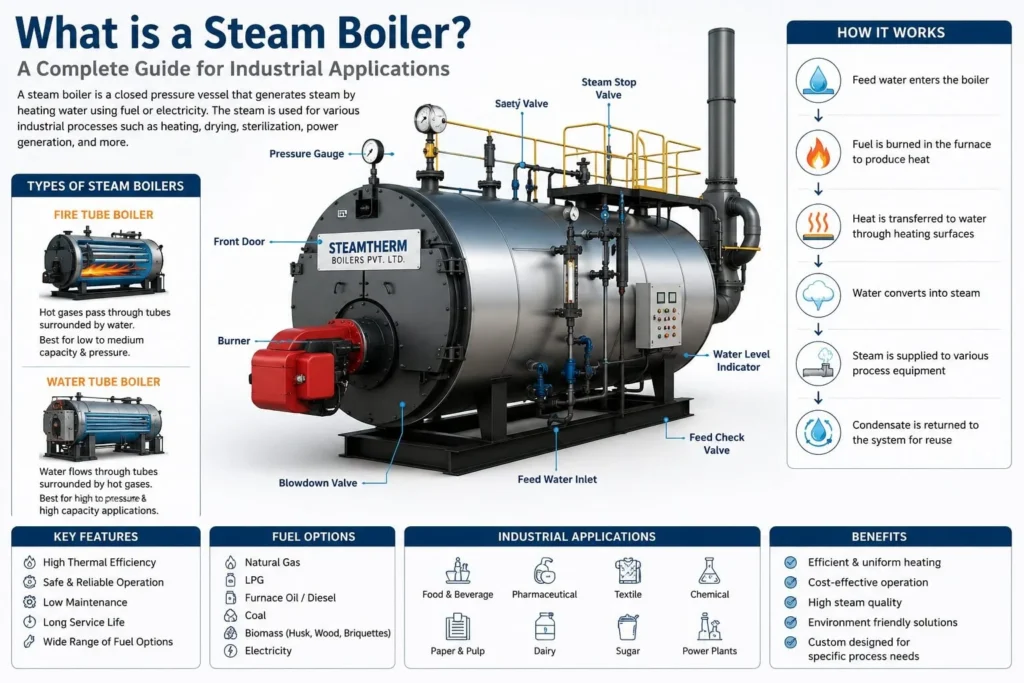
A steam boiler is a closed pressure vessel that heats water to generate steam at a specified pressure and temperature. The heat energy is produced by burning fuels such as natural gas, LPG, diesel, furnace oil, coal, biomass, wood pellets, rice husk, or by using electric heating elements.
The generated steam is then distributed through insulated piping to various process equipment, where it transfers heat efficiently before condensing back into water for reuse.
How Does a Steam Boiler Work?
The basic steam generation process consists of the following steps:
- Treated feedwater enters the boiler through the feedwater system.
- Fuel is burned inside the furnace, producing high-temperature flue gases.
- Heat is transferred through the boiler’s heating surfaces to the water.
- Water reaches its boiling point and converts into steam.
- Steam accumulates in the steam space.
- The required steam pressure is maintained automatically by the control system.
- Steam flows through the main steam line to process equipment.
- Condensate is collected and returned to the feedwater tank whenever possible.
Main Components of a Steam Boiler
- Boiler Shell
- Furnace
- Steam Drum / Steam Space
- Fire Tubes or Water Tubes
- Burner or Fuel Feeding System
- Feed Water Pump
- Safety Valve
- Steam Stop Valve
- Feed Check Valve
- Pressure Gauge
- Water Level Gauge
- Blowdown Valve
- Economizer (Optional)
- Chimney
- Control Panel & PLC
Each component contributes to safe operation, efficient heat transfer, and reliable steam generation.
Types of Steam Boilers
Fire Tube Boilers
In fire tube boilers, hot flue gases pass through tubes while water surrounds the tubes.
Advantages
- Compact design
- Easy maintenance
- Lower installation cost
- Suitable for low and medium steam capacities
Applications
- Food Processing
- Hotels
- Hospitals
- Textile Plants
- Packaging Industries
- Chemical Industries
Water Tube Boilers
In water tube boilers, water flows inside the tubes while hot combustion gases flow around them.
Advantages
- High pressure capability
- High steam generation capacity
- Faster steam generation
- Higher efficiency for large industrial applications
Applications
- Power Plants
- Petrochemical Plants
- Refineries
- Large Manufacturing Facilities
Types of Fuel Used in Steam Boilers
Industrial boilers can operate on a variety of fuels, including:
- Natural Gas
- LPG
- Furnace Oil (FO)
- Light Diesel Oil (LDO)
- High Speed Diesel (HSD)
- Coal
- Biomass Briquettes
- Wood Pellets
- Rice Husk
- Bagasse
- Sawdust
- Agro Waste
- Electricity
The ideal fuel depends on operating cost, fuel availability, environmental regulations, boiler design, and process requirements.
Industrial Applications of Steam Boilers
Steam boilers are widely used across industries, including:
- Food & Beverage Processing
- Pharmaceutical Manufacturing
- Dairy Plants
- Textile Industry
- Chemical & Petrochemical Plants
- Paper & Pulp Mills
- Rubber & Tyre Manufacturing
- Distilleries & Breweries
- Sugar Mills
- Packaging Industry
- Automobile Components
- Paint & Coating Plants
- Hospitals & Healthcare Facilities
- Commercial Laundries
Advantages of Steam Boilers
- High thermal efficiency
- Uniform and controlled heating
- Reliable steam generation
- Lower operating costs with proper maintenance
- Wide range of fuel options
- Suitable for continuous industrial operation
- Long service life
- Easy integration with process heating systems
Key Factors When Selecting a Steam Boiler
Selecting the correct boiler requires evaluating:
- Required steam capacity (kg/hr or TPH)
- Operating pressure
- Steam quality requirements
- Fuel type and availability
- Boiler efficiency
- Water quality
- Available installation space
- Emission regulations
- Future expansion plans
- Operating and maintenance costs
A properly selected boiler improves efficiency, reduces fuel consumption, and lowers lifecycle operating costs.
Importance of Water Treatment
Proper feedwater treatment is essential for reliable boiler performance.
Benefits include:
- Prevents scale formation
- Minimizes corrosion
- Improves heat transfer
- Reduces fuel consumption
- Extends boiler life
- Improves steam quality
- Reduces maintenance costs
Water softening, RO systems, DM plants, chemical dosing, and proper blowdown practices are commonly used to maintain water quality.
Boiler Safety
Every steam boiler should be equipped with essential safety devices, including:
- Safety Valve
- Low Water Level Protection
- Pressure Gauge
- Water Level Indicator
- Pressure Controls
- Flame Failure Protection
- Emergency Shutdown System
Regular inspection and preventive maintenance are critical to safe operation.
Maintenance Best Practices
To ensure long-term performance:
- Perform daily operator inspections.
- Monitor boiler water chemistry.
- Maintain proper blowdown.
- Clean fireside and waterside heating surfaces.
- Tune the burner for efficient combustion.
- Inspect safety valves and controls periodically.
- Keep maintenance records and operating logs.
Conclusion
A steam boiler is one of the most important utilities in industrial manufacturing, providing reliable and efficient thermal energy for a wide range of applications. Selecting the right boiler, maintaining proper water treatment, and following recommended operating practices can significantly improve efficiency, reduce operating costs, and increase equipment life.
Whether your requirement is an oil & gas-fired, biomass-fired, electric, or solid-fuel boiler, investing in a high-quality, well-engineered steam boiler is essential for safe and dependable industrial operations.
Why Choose Steamtherm Boilers?
Steamtherm Boilers Pvt. Ltd. delivers advanced process heating solutions designed for modern industries. Our product portfolio includes energy-efficient steam boilers, thermic fluid heaters, hot air generators, pressure vessels, and complete steam system solutions, supported by engineering, installation, commissioning, and after-sales service.
Need help selecting the right boiler? Contact Steamtherm Boilers for expert guidance and a customized solution tailored to your process requirements.